Struggling to keep your projects on track?
You’re not alone managing tasks, teams, and timelines without the right tool can slow you down fast.
That’s where Monday.com comes in. It’s not just another task manager it’s a visual, flexible, and powerful work platform designed to make your workflow smooth and stress-free.


✅ START MONDAY FREE TRIAL NOW!
💡 In this review, I’ll break down Monday.com’s top features, real user experiences, and why it worked for me.
🎯 Let’s dive in and see if Monday.com is the game-changer your team needs!
📌 My Personal Experience Using Monday.com
When I first signed up, I didn’t expect much. I had tried other tools like Trello and Asana they were okay, but something always felt missing.
With Monday.com, I could customize my workflows exactly the way I wanted. For example:
- I created a board called “Content Calendar” with columns for topic, deadline, assigned person, and status.
- I set up an Automation that sends me an email if a task is overdue.
- We started using Monday’s comment section to give feedback instead of chasing emails.
Within 2 weeks, productivity went up and stress went down.
I got a great deal by using a Monday.com coupon code when I signed up, so keep an eye out for one!
Highlights from My Experience

- The clean design makes you actually want to use it.
- It’s like Excel for teams but visual and much more powerful.
- The automations and templates save time.
- You can manage any workflow marketing, sales, HR, logistics, anything!
Monday.com is used by more than 180,000+ organizations worldwide, including big brands in tech, finance, marketing, and logistics (source: Monday.com company overview).
📌 The 4 Core “Tools/Use-Modes” Inside Monday.com & Their Details
1️⃣. Work Management / Project Management
What it is:
The classical core use of Monday.com managing tasks, projects, teams, workflows, deadlines, progress, etc. Essentially: “project management.”
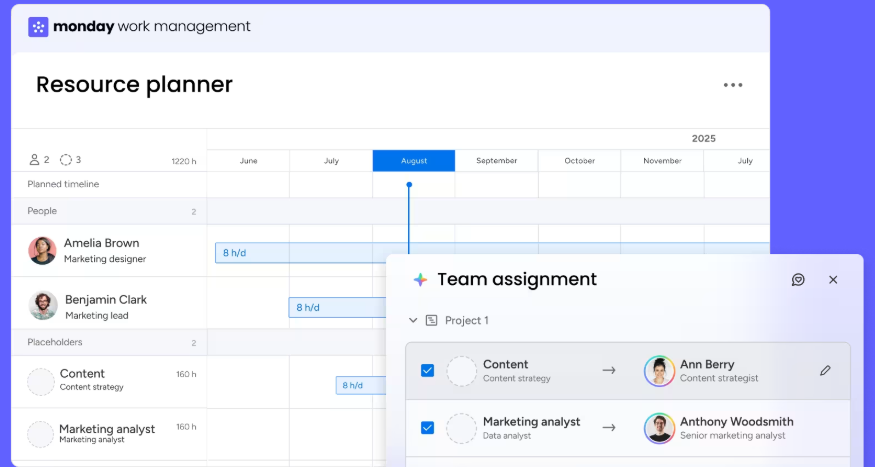
Main Features:
- Customizable boards + 200+ templates for different workflows (content calendars, project plans, HR, marketing, etc.)
- Multiple views: Kanban, Table, Calendar, Gantt / Timeline, Workload, etc.
- Status columns, assignees, deadlines, priority, custom fields, attachments flexible task/item management.
- Dashboards & Reporting: Combine data across boards; visualize progress, workloads, deadlines, charts, metrics.
- Time-tracking (on certain plans): Useful if you bill by time or want to monitor task durations.
- Workflow automation (on paid plans): For recurring tasks, status changes, notifications, reminders.
Pros:
- Visual & flexible you can tailor boards to any kind of project or workflow.
- Multiple views help teams “see work in the way that suits them.”
- Dashboards make it easy to manage multiple projects at once and track metrics/ progress.
- Time tracking + automation brings discipline and reduces manual work.
- Scales from 1-person freelancers to large teams / enterprises.
Cons:
- For small/micro projects, setup can feel like overkill.
- Some useful views & automations are locked behind paid plans.
- As you add users/tasks, cost goes up (seat-based pricing).
- Over-customization can lead to “board bloat” too many fields/columns/views, which can confuse users.
Pricing Plan:
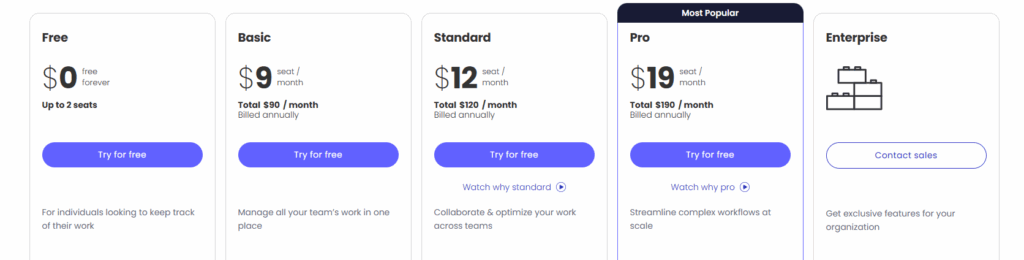
| Plan | Price (Per User/Month) | Total for 10 Seats | Key Features |
|---|---|---|---|
| Basic | $9 | $90/month | Dev templates, unlimited boards |
| Standard | $12 | $120/month | Timeline view, 250 automations |
| Pro | $20 | $200/month | Time tracking, 25k automations |
| Enterprise | Custom | Contact Sales | Security, permissions, full support |
2️⃣. CRM & Sales Pipeline Management (Sales / Lead Tracking “Tool Mode”)
What it is:
Monday.com can be configured to act like a CRM / sales-pipeline tool. Teams use it to track leads, sales progress, contacts, deals not just internal tasks.
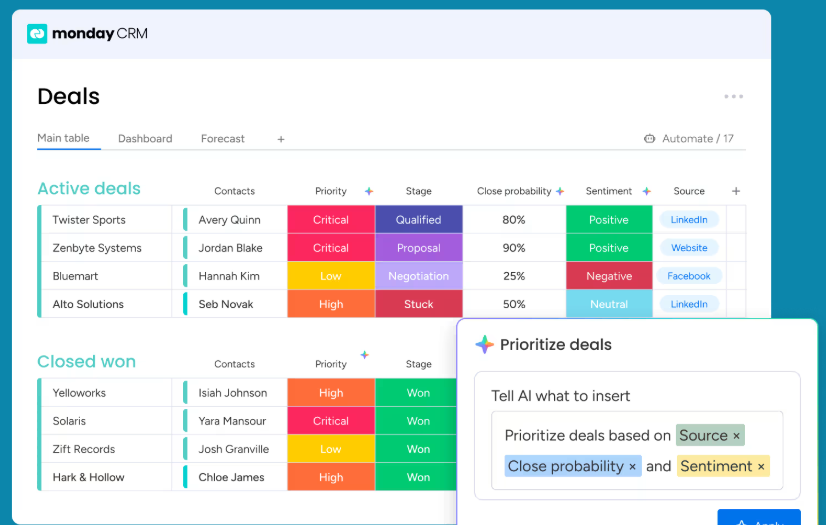
Main Features:
- Custom boards for leads/contacts/deals with custom fields for status, deal size, contact info, next action, etc.
- Pipeline visualization: you can use Kanban or other views to move deals through stages (New → Contacted → Negotiation → Closed).
- Integrations with email, communication tools, maybe automations to trigger follow-up reminders or status changes.
- Collaboration & task assignment multiple team members can work on sales tasks, attach notes/files, track activity.
Pros:
- You don’t need a separate CRM Monday.com doubles as sales tracker.
- Flexible you shape pipeline as per your business logic (stages, custom fields).
- Centralized Sales + project work + tasks remain in one place (no multiple tools).
- Visibility everyone sees where a lead/deal stands, who’s working on it.
Cons:
- Not as deep/advanced as dedicated CRMs (less specialized sales analytics, contact history, outreach automation, etc.).
- For heavy sales teams, large deals, complex pipelines might hit limitations without extra customization or integrations.
- Seat-based pricing means many sales users = cost increases.
Pricing Plan:
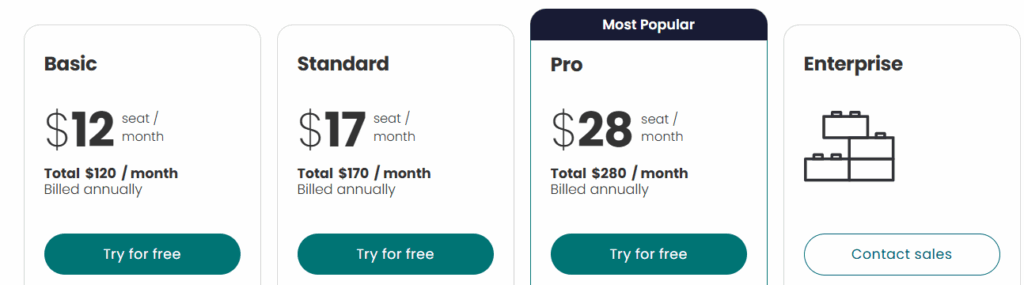
| Plan | Price (Per User/Month) | Total for 10 Seats | Key Features |
|---|---|---|---|
| Basic | $12 | $120/month | Unlimited contacts, pipelines, lead tracking |
| Standard | $17 | $170/month | Email sync, quotes/invoices, 250 automations |
| Pro | $28 | $280/month | Forecasting, email templates, 25k automations |
| Enterprise | Custom | Contact Sales | Advanced permissions, analytics, governance |
3️⃣. Dev / Bug-Tracking / Product Workflow Management
What it is:
Teams working on software development, products or iterative work use Monday.com as a “Dev-workflow tool” for sprint planning, backlog, bug tracking, release management, feature rollout tracking, etc.
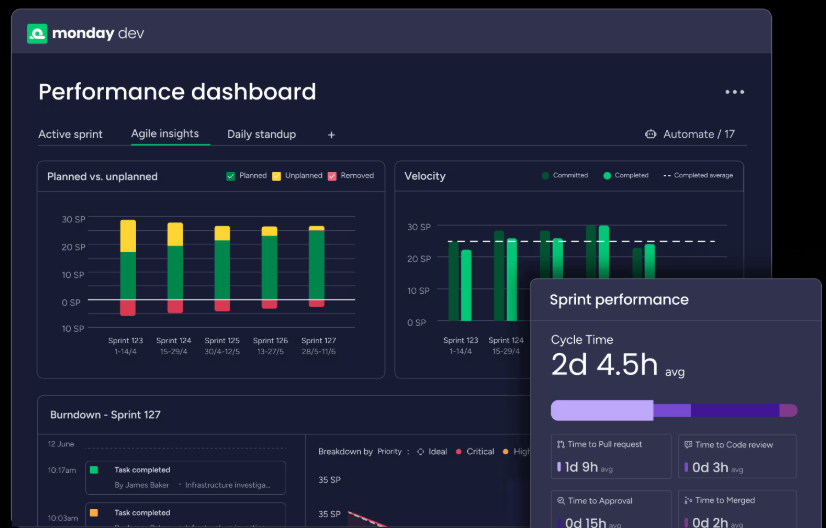
Main Features:
- Boards for backlog, to-do, in-progress, QA, done similar to Kanban or Scrum boards.
- Task/item custom fields: priority, due date, assignee, tags (bug / feature / improvement), status, dependencies etc.
- Multiple views: Kanban, Timeline / Gantt / Calendar to plan sprints or release schedules.
- Automations & integrations: trigger notifications on status changes, integrate with version control or communication tools; automate recurring tasks.
- Dashboards: track bug count, release progress, workload, deadlines, resource allocation across projects.
Pros:
- Brings clarity to development workflows everyone sees tasks, bugs, priorities.
- Flexible for different methodologies Scrum, Kanban, hybrid.
- Keeps communication, tasks, status, documentation in one place.
- Useful for cross-functional teams developers, QA, product, design all collaborate on one board.
Cons:
- Not as specialized as specialized Dev/project-management tools (limited advanced dev-specific features: version control integration, code review etc.).
- For very large/complex projects, boards can get messy without strict discipline.
- Some advanced views / automations may require higher plan tiers.
Pricing Plan:
- Again, same seat-based plans. For professional-level features like automations & dashboards, need Standard / Pro.
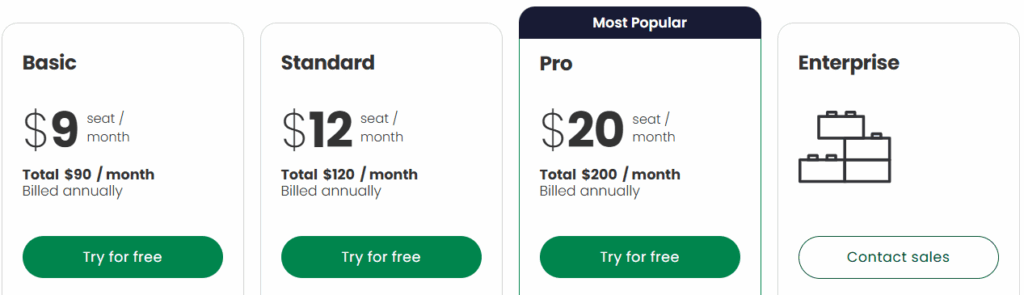
| Plan | Price (Per User/Month) | Total for 10 Seats | Key Features |
|---|---|---|---|
| Free | $0 | Free (Up to 2 users) | 3 boards, 8 column types, mobile app |
| Basic | $9 | $90/month | Unlimited boards, 5GB storage, 1‑week log |
| Standard | $12 | $120/month | Timeline view, guest access, 250 automations |
| Pro | $19 | $190/month | Time tracking, private boards, 25k automations |
| Enterprise | Custom | Contact Sales | Advanced security, analytics, support |
4️⃣. Collaboration, Workflow Automation & Team Coordination
What it is:
This is more like the “glue” features that let teams communicate, coordinate, automate routine tasks, share files, track progress and collaborate across projects, departments, functions. This mode underpins all the other “tools.”
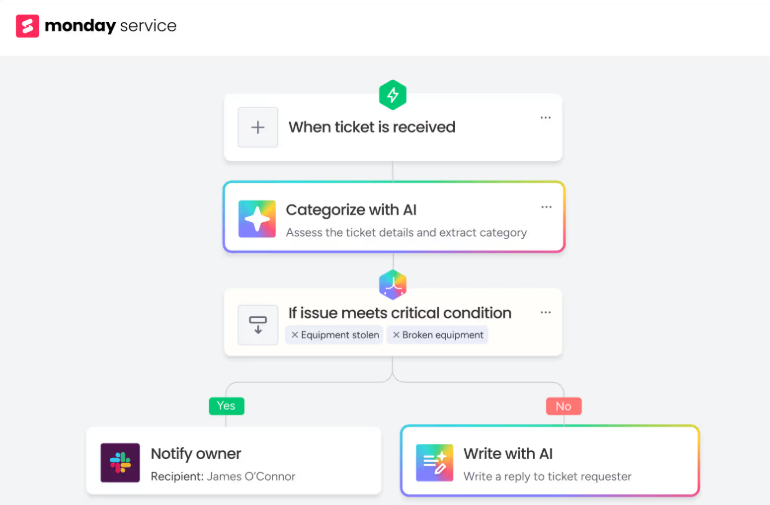
Main Features:
- Comments, updates, file attachments per task central conversation per item.
- Integrations with external tools: email services, storage, communication tools, calendars etc.
- Workflow automations: status changes, reminders, recurring tasks, notifications.
- Shared docs / internal knowledge base (in some versions) helps teams keep docs, files, project specs in context.
- Unified dashboards: across boards/team visibility over tasks, workloads, deadlines, progress, resources.
Pros:
- Reduces dependence on email/chat everything related to a task/project stays inside Monday.com.
- Automations reduce manual effort and human error.
- Integrations mean fewer tool switches everything works in one workspace.
- Good for remote/distributed teams: transparent updates, shared context, accountability.
Cons:
- Too many notifications/automations can become noise if not managed.
- If team isn’t disciplined boards can get cluttered, confusing.
- Some collaboration/automation features locked behind paid plans.
Pricing Plan:
- Free / Basic plans give limited collaboration (boards, basic tasks, limited storage).
- Paid plans unlock full collaboration + automation + integration features. Standard / Pro recommended for teams.
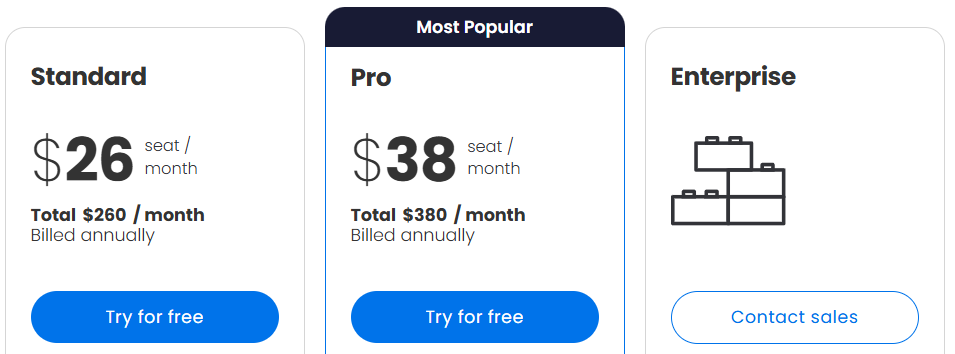
| Plan | Price (Per User/Month) | Total for 10 Seats | Key Features |
|---|---|---|---|
| Standard | $26 | $260/month | Email tickets, workflows, 250 automations |
| Pro | $38 | $380/month | Auto‑responses, 25k automations |
| Enterprise | Custom | Contact Sales | Advanced security, 50‑board dashboards |
📌 Monday.com Pros & Cons
Choosing a project management tool is a long-term decision, so here’s the truth what Monday.com does well and where it still struggles:
| ✅ Pros | ❌ Cons |
|---|---|
| Super easy to use with a cleaner interface and lower learning curve than many tools. | Advanced features can feel overwhelming for completely new users. |
| Highly customizable boards that adapt to almost any workflow or industry. | Pricing increases as your team grows because billing is seat‑based. |
| Automations save hours by reducing follow‑ups and manual updates. | The mobile app is more limited compared with the desktop experience. |
| Great visual planning with Gantt, Kanban, Timeline, and chart views. | Lower‑tier plans include automation limits, pushing upgrades for heavy usage. |
| Excellent collaboration with comments, file sharing, and mentions in one place. | Offline working options are limited and require an internet connection for most tasks. |
| Integrations work smoothly with Gmail, Slack, Drive, Zoom, and many other apps. |
💡 Try the 14-day free trial first to know exactly what you need.
📌 Real User Reviews: What Others Say About Monday.com
After checking top review sites like G2, PCMag, and Forbes, here’s a short summary of what people are saying:
| Platform | Rating | Summary |
|---|---|---|
| G2 | ★ 4.7/5 | “Easy to use, flexible, and beautiful interface.” |
| PCMag | ★ 4.5/5 | “Best for task planning and project tracking.” |
| Forbes | ★ 4.2/5 | “Great for visual thinkers and mid-size teams.” |
Common Praise:
- “It made my team finally stick to a system.”
- “I never knew organizing work could feel fun.”
- “The automations are a game-changer.”
Common Complaints:
- “Too many features at first took time to adjust.”
- “Mobile app can be buggy at times.”
- “Pricing goes up quickly if you scale your team.”

📌 Monday.com Use Cases by Industry
Monday.com isn’t a one-size-fits-all tool that’s the beauty of it. It’s flexible enough to fit different industries with ease. Here’s how various teams use it in real life:
- Marketing Teams:
They use Monday.com to manage content calendars, plan social media campaigns, and track performance. Templates like “Campaign Tracker” and “Content Planner” make it super easy to visualize every launch. - Sales Teams:
Sales reps can build CRM-style boards to manage leads, track outreach, and even automate follow-ups. It becomes their daily pipeline dashboard.
- HR Departments:
From onboarding checklists to leave approvals and recruitment workflows, HR can keep everything on track no messy spreadsheets.

- IT Teams:
They use Monday.com to track support tickets, manage software bugs, and collaborate across technical tasks with real-time updates. - Logistics and Operations Teams (Like ShipChain Users):
Great for dispatch planning, delivery tracking, and warehouse coordination. Monday.com can even help map timelines for supply chain tasks.
📌 Real-Life Case Study: How We Used Monday.com
When I first signed up, I had one goal organize my marketing team’s weekly tasks without drowning in spreadsheets or WhatsApp messages.
Here’s what I did:
- Created a board called “Weekly Task Planner”
- Added columns like: Task name, Deadline, Assigned to, Status, and Notes
- Invited 4 team members and assigned them tasks
- Used automation to notify me when tasks were overdue
- Integrated Google Drive to attach assets directly

After just 2 weeks:
- We cut our internal meetings by 40%
- Everyone knew their priorities on Monday morning
- Deadlines were hit with zero micromanagement
- I felt more in control, and my team felt less stressed
✅ That’s when I knew Monday.com wasn’t just another app it was our new project brain.
📌 Performance Impact: What Improved After Using Monday.com
Before using Monday.com, my team’s workflow was all over the place. We used WhatsApp for updates, Excel for task lists, and email for follow-ups and still missed deadlines. But after switching to Monday.com, I noticed some real improvements within just a few weeks.
- Task completion went up by 25% because everyone could clearly see what needed to be done and by when.
- Fewer delays thanks to status tracking and automatic reminders, we stayed on top of deadlines.

- Meetings were cut in half since updates were visible on the dashboard, we didn’t need daily check-ins.
- Better accountability it was easier to track who’s working on what, so there was less confusion and blame.
Overall, Monday.com helped bring structure and visibility to our daily operations. It saved us both time and mental energy.
Performance Impact After Using Monday.com
Before we used Monday.com, our workflow lacked structure and we’re not alone. According to research, teams that use project management software can improve productivity by up to 25%(source: a leading project management productivity study).
📌 Top Monday.com Alternatives
Not every team works the same way, so it’s smart to compare Monday.com with other popular tools before deciding. Here’s a quick look at the top rivals:
| Tool | Best For | Strength | Weakness |
|---|---|---|---|
| Monday.com | Teams needing flexibility & visual planning | Automation, dashboards, multiple work views | Pricing rises with team size |
| ClickUp | Feature-heavy users with complex needs | Tons of features even in free plan | Can feel cluttered & overwhelming |
| Asana | Teams focused on pure task/project management | Strong structure, great timeline view | Limited customization & automations on lower plans |
| Trello | Small teams & simple task boards | Easy and beginner-friendly Kanban board | Not suitable for complex project scaling |
🧠 Which one should you choose?
- Choose Monday.com → if you want visual workflows, automations, and dashboards
- Choose ClickUp → if you need a feature factory and don’t mind complexity
- Choose Asana → if your team follows structured tasks and deadlines
- Choose Trello → if you just want very simple task tracking for small work
My honest take:
If your work involves multiple teams, different workflows, scalability, and visibility needs → Monday.com still leads the list in real usefulness.

7. Final Thoughts: Should You Try Monday.com?
After using Monday.com for 60+ days, here’s the conclusion:
Yes, Monday.com is worth it for teams who want clarity, faster execution, and stress-free collaboration.

Why It Stands Out:
✔ Visual boards make work easier to understand
✔ Automations remove repetitive tasks
✔ Dashboards prevent project delays
✔ Works for any department Marketing, Sales, HR, Dev, Operations
✔ Helps remote teams stay connected and accountable
Who will love it the most?
- Small to mid-size teams who collaborate frequently
- Agencies, project managers, operations teams
- Businesses who want one tool for everything
Who might skip it?
- Individuals needing only simple to-do lists
- Teams with extremely tight budgets
👉 Try it yourself and watch your productivity transform.
📚 Must Read:
Monday Work Management Review 2025: Is It Worthy Or Not?

❓ Frequently Asked Questions
Q1. Can Monday.com replace Excel?
Yes, for task tracking and workflows. Excel is better for complex calculations.
Q2. Is Monday.com secure for client data?
Yes, it uses encryption, two-factor login, and GDPR-compliant policies.
Q3. How long does it take to set up a workflow?
Usually 10–30 minutes using a template.
Q4. Is it good for remote teams?
Yes, it’s built for remote work with real-time updates and easy communication.

I’m a CRM and Xero expert with over 6 years of experience. I specialize in researching, testing, and simplifying complex systems like Xero and other CRM tools. From setting up workflows to writing easy-to-understand content, I help businesses choose the right platforms and use them better for real growth.