Managing tasks, deadlines, teams, and daily work can get messy fast. That’s where work management software helps.
These tools bring your projects, tasks, files, communication, and progress tracking into one place, so your team knows exactly what to do, who is doing it, and when it needs to be done.
In this guide, we’ll compare the 5 best work management software, including Monday.com, ClickUp, Asana, Jira, and Wrike.
Monday.com takes the #1 spot because it offers a strong balance of ease of use, automation, dashboards, team collaboration, and scalability. 💼✨
By the end, you’ll know which tool fits your team best whether you’re running a startup, agency, remote team, software team, or growing business. ✅
1. What Is Work Management Software? 🧩
Work management software is a tool that helps teams plan, organize, track, and complete work from one central place. Instead of managing tasks through spreadsheets, emails, or WhatsApp messages, businesses use these platforms to keep everything organized and visible. 📋✨
With work management software, teams can:
- Create and assign tasks 👨💻
- Track deadlines and progress 📅
- Collaborate with team members 🤝
- Share files and updates 📂
- Automate repetitive work ⚡
- Monitor productivity and performance 📊
In simple words, it helps businesses manage who is doing what, when it’s due, and how the work is progressing.
Work Management vs Project Management 🔄
Many people think both are the same, but there’s a small difference.
| Project Management 📁 | Work Management 🧩 |
|---|---|
| Focuses mainly on projects | Focuses on all daily work |
| Tracks project timelines & milestones | Manages tasks, operations, workflows & projects |
| Mostly used by project managers | Used by entire teams |
| Limited to project execution | Covers complete work processes |
👉 Project management is just one part of work management.
For example:
- Managing a website redesign = Project Management
- Managing marketing, HR, sales, support, and projects together = Work Management
That’s why modern businesses now prefer work management software instead of basic project tools. 🚀
Why Businesses Use Work Management Software in 2026 💼
As teams become more remote and workflows more complex, businesses need better ways to stay organized. Here’s why companies are rapidly adopting work management tools:
1. Better Team Collaboration 🤝
Everyone can communicate, update tasks, and track progress in one place.
2. Improved Productivity ⚡
Automation reduces repetitive work and saves time.
3. Clear Visibility 📊
Managers can instantly see project status, pending tasks, bottlenecks, and team workload.
4. Remote Work Friendly 🌍
Perfect for remote and hybrid teams working from different locations.
5. Faster Decision Making 🚀
Real-time dashboards and reporting help businesses make smarter decisions quickly.
6. Reduced Confusion ✅
No more lost emails, missed deadlines, or unclear responsibilities.
2. How We Chose the Best Work Management Software in 2026 🔍
To choose the best work management software, we didn’t look at only popularity. A tool can be famous but still not fit every team. So, the ranking is based on practical things that actually matter for businesses. ✅
We compared each tool based on:
Ease of use 🧑💻
The software should be simple enough for beginners, not just technical teams.
Task and workflow management 📋
A good tool should make it easy to create tasks, assign work, set deadlines, and track progress.
Automation features ⚡
Automation saves time by reducing manual work like reminders, status updates, approvals, and recurring tasks.
Team collaboration 🤝
We checked how well each platform supports comments, file sharing, updates, notifications, and real-time teamwork.
Dashboards and reporting 📊
Strong reporting helps managers see workload, deadlines, project progress, and performance clearly.
Integrations 🔗
The best tools connect with apps like Slack, Google Drive, Microsoft Teams, Zoom, GitHub, CRM tools, and more.
Pricing and scalability 💰
A tool should be affordable for small teams but powerful enough to support growing businesses.
Best use case 🎯
Every tool has a strength. For example, Monday.com is best overall, ClickUp is great for customization, Asana is simple for collaboration, Jira is strong for developers, and Wrike is useful for enterprise teams.
Based on these factors, Monday.com takes the #1 spot because it offers the best balance of usability, automation, dashboards, integrations, and scalability for most teams. 🏆
3. Monday.com — Best Overall Work Management Software 🏆
If you had to pick one tool that does everything well – without a steep learning curve – it’s Monday.com. It’s the perfect blend of power, beauty, and simplicity. 🌟
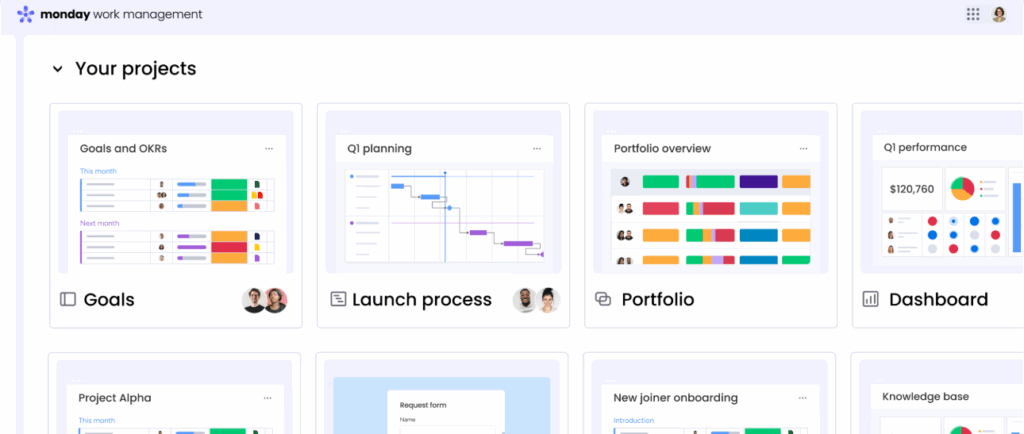
Monday.com started as a simple team collaboration tool, but in 2026, it’s a full-blown Work OS (Operating System) that can manage anything: marketing campaigns, software development, HR onboarding, sales pipelines, even your family vacation planning. 🏖️
Why Monday.com Is Ranked #1 🥇
- 🎯 Visual & intuitive – Colorful boards, timelines, Gantt charts, Kanban, Calendar, and Form views. No training required.
- ⚡ Industry-leading automation – 200+ pre-built “if-this-then-that” recipes. Save hours daily.
- 🤖 AI assistant built-in – Generate task descriptions, summarize long threads, predict deadlines.
- 🔗 50+ native integrations – Slack, Zoom, Gmail, Teams, Jira, Salesforce, HubSpot, and more.
- 📱 Mobile app is actually usable – Full functionality, offline mode, voice-to-task.
- 🔒 Enterprise-grade security – SOC 2, GDPR, HIPAA compliance available.
Key Features of Monday.com 🛠️
| Feature | What It Does |
|---|---|
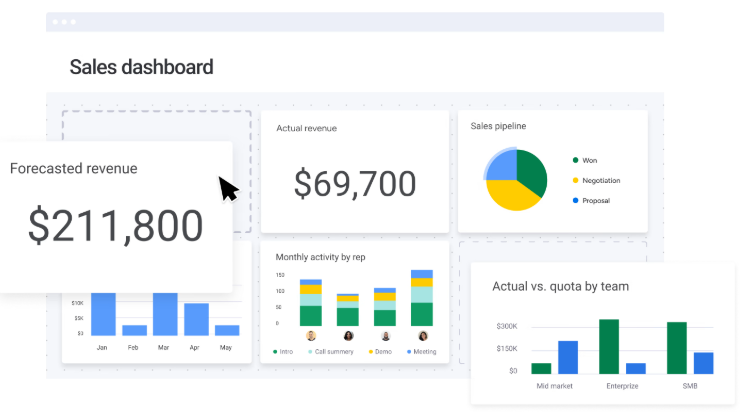
| 📊 Dashboards | Combine multiple boards into one real-time dashboard (budget, status, workload) |
| 🧩 Boards & Columns | Customizable columns: status, person, date, timeline, file, formula, etc. |
| 🔁 Automations | “When due date passes → notify owner” / “When status done → move to next board” |
| 🧠 Monday AI | Automatically summarize updates, suggest next steps, draft replies |
| 🗂️ Docs & Whiteboards | Collaborative docs + infinite whiteboards (great for brainstorming) |
| 📅 Workload View | See who’s overallocated before burnout happens |
| 🔗 Integrations Hub | Connect to Slack, Outlook, Google Drive, Adobe, GitHub, etc. |
| 🧪 Formula Column | Custom calculations (e.g., profit = revenue – cost) |
Monday.com Pricing Plans (2026, annual billing) 💰
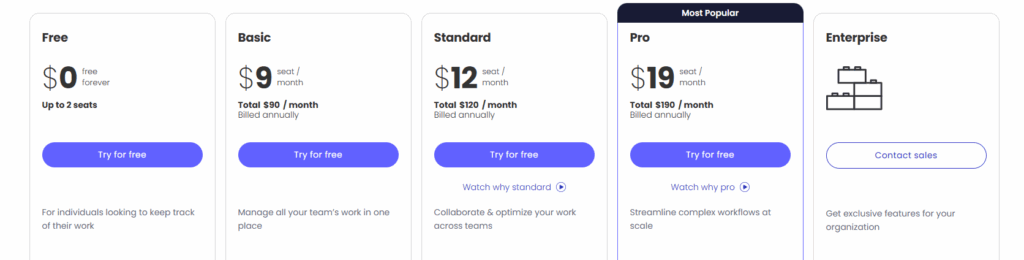
| Plan | Price per seat/month | Best For | Key Limits |
|---|---|---|---|
| Free | $0 (up to 2 seats) | Solo testers | 3 boards, 200+ templates, no automations |
| Basic | $9 | Small teams starting out | Unlimited free viewers, 5GB storage |
| Standard | $12 | Growing teams | Timeline & Gantt views, 250 automations/month |
| Pro | $19 | Advanced users | Private boards, time tracking, formula columns, 25K automations |
| Enterprise | Custom | Large orgs | Advanced security, SLA, dedicated CS |
⚠️ Note: Monthly billing is ~20% higher. Minimum 3 seats on paid plans (but you can add guests for free).
Pros & Cons of Monday.com ✅❌
| ✅ Pros | ❌ Cons |
|---|---|
| Gorgeous, intuitive interface | Can get expensive for large teams |
| Incredible automation library | Reporting is less powerful than Wrike |
| 200+ templates for every industry | No built-in chat (integrates with Slack/Teams) |
| AI features actually useful | Free plan very limited (2 seats, 3 boards) |
| Scales from 2 to 2,000+ users | Overwhelming if you don’t use templates |
Best For 🎯
- ✅ Marketing agencies – Campaign tracking, content calendars, client approvals
- ✅ Operations teams – SOP management, internal requests
- ✅ Remote-first companies – Visual status updates replace standups
- ✅ Non-technical teams – No coding, no complex setup
- ✅ Small to mid-size businesses – Sweet spot is 10–500 users
My Verdict on Monday.com 🧑⚖️
Monday.com is the safest bet for 90% of teams. It’s not the cheapest, not the most feature-packed, but it’s the one that your team will actually enjoy using. And adoption = success. If you have budget (12–12–24/seat) and want zero headaches, just buy Monday. 🏆
Rating: ⭐ 9.6/10
Best alternative if Monday isn’t for you: ClickUp (if you want more features for less money) or Asana (if you prefer simplicity).
4. ClickUp — Best for Customization & All-in-One Productivity ⚡
If Monday.com is the Apple of work management (polished, simple, premium), ClickUp is the Android (incredibly powerful, highly customizable, sometimes messy). 🔧
ClickUp’s promise is audacious: replace all your work tools – Asana, Jira, Trello, Google Docs, Excel, even email – with one platform. And in 2026, they’re surprisingly close. 😮
Key Features of ClickUp 🧩
ClickUp has over 30+ views, 1,000+ integrations, and more settings than you’ll ever need. Here’s the highlight reel:
| Feature | What It Does |
|---|---|
| 📋 Everything view | List, Board, Calendar, Gantt, Timeline, Workload, Table, Activity, Map, Mind Map, Whiteboard |
| 🧠 ClickUp AI | Write docs, summarize tasks, predict estimates, generate subtasks |
| 📝 Native Docs | Collaborative docs that link directly to tasks (no Google Docs needed) |
| 📧 Email inside ClickUp | Send/receive emails as tasks – game changer for support teams |
| 🎯 Goals & OKRs | Track company goals with measurable targets |
| 🧪 Custom Fields | 50+ field types: formulas, checkboxes, dropdowns, locations, etc. |
| 🔗 Integrations | Slack, GitHub, Figma, Zoom, Miro, and 1,000+ via Zapier/Make |
| 📱 Mobile & Desktop Apps | Full offline mode, time tracking, voice memos |
ClickUp Pricing (2026, annual billing) 💰

| Plan | Price per seat/month | Best For | Key Limits |
|---|---|---|---|
| Free Forever | $0 (unlimited members) | Personal / small teams | 100 uses of custom fields, 100 automations/mo |
| Unlimited | $7 | Growing teams | Unlimited everything except advanced features |
| Business | $12 | Mid-size teams | Advanced automations, goals, time tracking |
| Business Plus | $19 | Larger teams | Increased limits, custom roles |
| Enterprise | Custom | Large orgs | Guaranteed uptime SLA, dedicated account manager |
💡 ClickUp’s free plan is unusually generous: unlimited members, 100MB storage, and most core features.
Pros & Cons of ClickUp ✅❌
| ✅ Pros | ❌ Cons |
|---|---|
| Insane amount of features for price | Steep learning curve – “analysis paralysis” |
| One of the best free plans available | Performance can lag with large data |
| Highly customizable (almost too much) | UI feels cluttered at times |
| Native docs, email, goals – all in one | Customer support slower than Monday |
| Active development (new features every week) | Some features feel half-baked |
Best For 🎯
- ✅ Power users & productivity nerds – You love tweaking every setting
- ✅ Startups on a budget – Free + Unlimited plans are unbeatable value
- ✅ Teams that hate switching apps – Docs, chat, email, tasks in one place
- ✅ Developers & product teams – Custom statuses, GitHub integration, sprints
- ✅ Solopreneurs & freelancers – Free plan is enough for one person

My Verdict on ClickUp 🧑⚖️
ClickUp is the best value work management software, period. If you have the patience to learn it (plan for 2–3 hours of setup), you’ll save thousands of dollars vs. buying separate tools for docs, tasks, and goals. Just be warned: it’s not “pretty” or “simple.” It’s a Swiss Army knife – incredibly useful but easy to cut yourself. ⚡
Rating: ⭐ 8.9/10 (would be 9.5 if UI/UX were smoother)
Best alternative if ClickUp isn’t for you: Monday.com (easier to use) or Asana (cleaner design).
5. Asana — Best for Simple Team Collaboration 🤝
Asana is the work management tool that feels like it was designed by people who hate chaos. It’s clean, calm, and ruthlessly focused on helping teams communicate and execute without noise. 🧘♀️
Founded by Facebook co-founder Dustin Moskovitz, Asana has matured into one of the most respected tools for task-based collaboration. In 2026, it strikes a near-perfect balance: powerful enough for enterprises, simple enough for a 5-person design team.
Why Asana Shines for Collaboration 🌟
- 🧼 Crystal-clear interface – No clutter, no overwhelm. You’ll understand it in 10 minutes.
- 💬 Conversation-centric – Every task has a comment thread. Tag teammates, attach files, ask questions – all without leaving the task.
- 🎯 Goals & Portfolios – Connect daily tasks to company-wide OKRs (Objectives & Key Results).
- 🔄 Workflows – Basic but effective automations (e.g., “when marked ready for review → assign to editor”).
- 📧 Email integration – Turn emails into tasks or reply via email. Remote teams love this.
- 🧩 200+ integrations – Slack, Teams, Zoom, Google Drive, Salesforce, Jira, etc.
Key Features of Asana 🛠️
| Feature | What It Does |
|---|---|
| 📋 List & Board views | Classic to-do list or Kanban-style sticky notes |
| 📅 Calendar & Timeline | Drag-drop scheduling, dependency management |
| 🎯 Goals | Set quarterly OKRs, link tasks to goals, track progress |
| 📊 Dashboards | Real-time graphs of status, workload, progress |
| ⚡ Rules (automations) | Pre-built “if this → then that” (limited on free plan) |
| 🔍 Advanced search | Find any task, comment, or file instantly across projects |
| 📂 Portfolios | See all projects in one rollup view (great for managers) |
| 🤖 Asana AI | Smart summaries, taskfield suggestions, deadline predictions |
| 📎 Proofing | Approve images/PDFs with annotations (Business plan) |
Asana Pricing (2026, annual billing) 💰
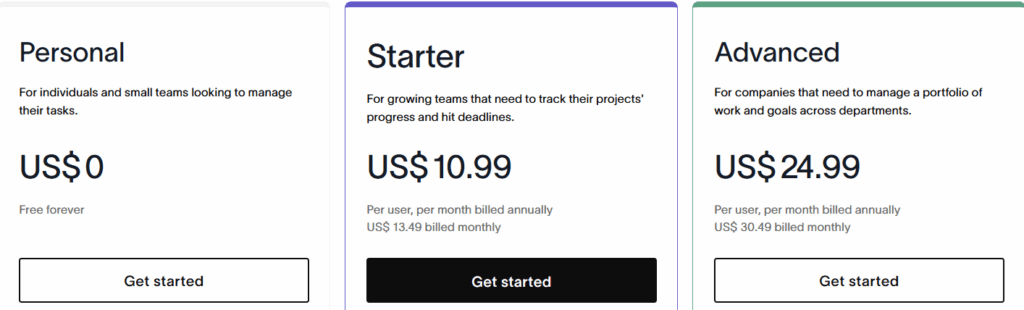
| Plan | Price per seat/month | Best For | Key Limits |
|---|---|---|---|
| Personal | $0 (up to 10 seats) | Small teams / personal | Unlimited tasks, but limited views & no admin controls |
| Starter | $10.99 | Growing teams | Timeline, rules (250/mo), forms, 5 project templates |
| Advanced | $24.99 | Scaling teams | Portfolios, workload, advanced reporting, 25K rules/mo |
| Enterprise | Custom | Large orgs | SAML, user provisioning, data export, priority support |
💡 Asana’s free plan supports up to 10 users – rare in 2026. Great for small nonprofits or family use.
Pros & Cons of Asana ✅❌
| ✅ Pros | ❌ Cons |
|---|---|
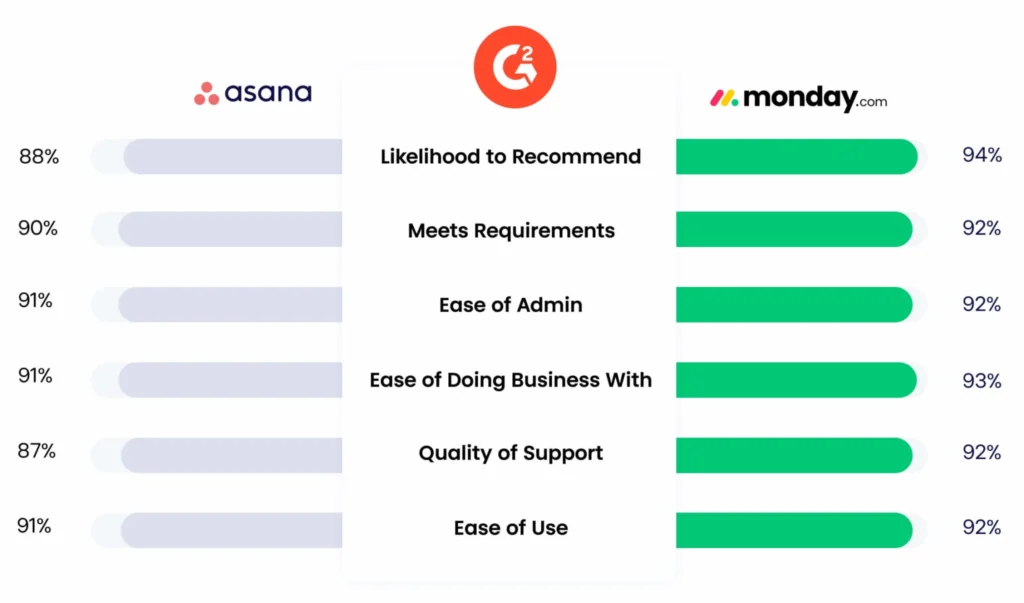
| Easy enough for non-tech grandmas | Light on reporting vs Wrike/Monday |
| Beautiful, calming interface | No native time tracking (needs integration) |
| Best-in-class task comments & collaboration | Automations less powerful than ClickUp |
| Goals feature ties work to strategy | Mobile app is good but not great |
| Trusted by giants like Spotify & NASA | Expensive at Advanced tier |
Best For 🎯
- ✅ Remote & hybrid teams – Async comments replace standups
- ✅ Marketing & content teams – Approvals, proofing, content calendars
- ✅ Operations & HR – Employee onboarding, request tracking
- ✅ Non-technical teams – Zero configuration needed
- ✅ Agencies managing multiple clients – Portfolios + forms
My Verdict on Asana 🧑⚖️
Asana is the most human work management tool. It doesn’t scream at you. It doesn’t overwhelm you. It just quietly helps your team stay on the same page. If your biggest problem is communication – “Who’s doing what? What’s the status? Did you see my comment?” – Asana is your answer. It’s not the cheapest or most powerful, but it might be the most peaceful. 🤝
Rating: ⭐ 9.2/10
Best alternative if Asana isn’t for you: Monday.com (more visual) or Trello (even simpler).
6. Jira — Best for Developers & Agile Teams 👨💻
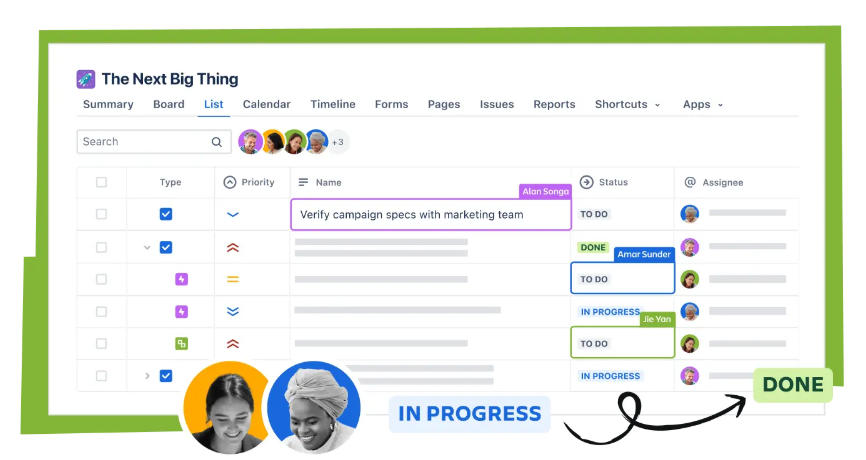
Jira (from Atlassian) is the undisputed king of software development work management. If your team does Scrum, Kanban, or any flavor of Agile, Jira is likely already on your radar. But here’s the truth: Jira is not for everyone. It’s built by developers, for developers – and it shows. 🛠️
In 2026, Jira has evolved with Jira Product Discovery and AI-powered suggestions, but the core remains: tracking bugs, user stories, sprints, and releases with surgical precision.
Why Jira Dominates Development Teams 💪
- 🐞 Bug & issue tracking – The gold standard. Link issues, mark duplicates, see impact.
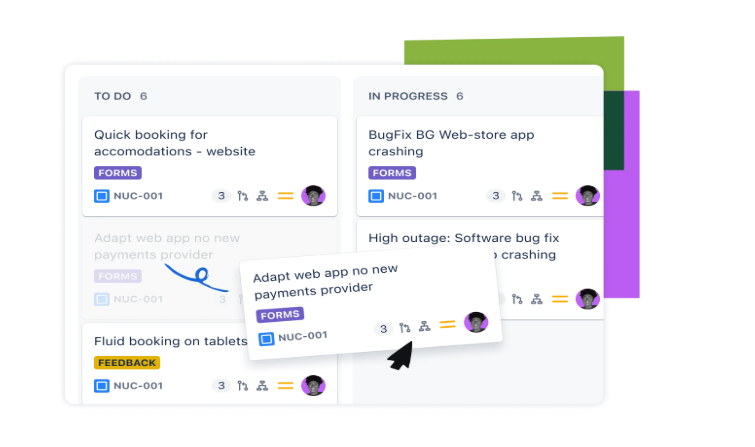
- 🔄 Scrum & Kanban boards – Sprint planning, backlog grooming, velocity charts.
- 🔗 Deep dev tool integrations – Bitbucket, GitHub, GitLab, Jenkins, CircleCI, Figma.
- 📊 Advanced reporting – Burndown, velocity, control charts, cumulative flow.
- ⚡ Automations – Powerful rule builder (e.g., “when PR merged → transition to done”).
- 🧩 Marketplace – 3,000+ add-ons (though many cost extra).
- 👥 Service Management – Separate product for IT/help desk teams.
Key Features of Jira 🛠️
| Feature | What It Does |
|---|---|
| 📝 Issues | Tasks, bugs, epics, stories, subtasks – fully customizable |
| 📋 Backlog | Prioritize work for upcoming sprints |
| 🏃 Sprints | Time-boxed work cycles (1–4 weeks) with sprint reports |
| 📈 Reports | Burndown, velocity, sprint health, time tracking |
| 🔗 Links & dependencies | Block, relate, or duplicate issues |
| 🧪 Roadmaps | High-level planning across teams (Advanced plan) |
| 🤖 Atlassian Intelligence | AI to summarize issues, suggest fields, auto-create subtasks |
| 🧩 Bulk operations | Move, edit, or transition hundreds of issues at once |
Jira Pricing (2026, annual billing) 💰
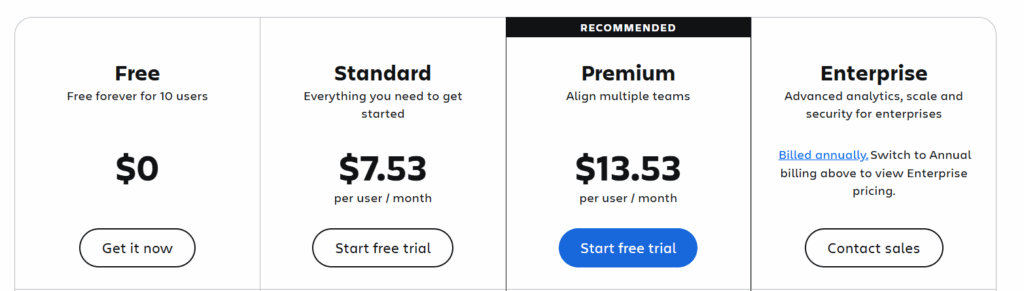
| Plan | Price per seat/month | Best For | Key Limits |
|---|---|---|---|
| Free | $0 (up to 10 users) | Small dev teams | 2GB storage, community support |
| Standard | $8.15 | Growing dev teams | 250GB storage, 9-to-5 support |
| Premium | $16 | Larger dev orgs | Advanced roadmaps, 24/7 support, 99.9% uptime SLA |
| Enterprise | Custom | Large orgs | Unlimited storage, dedicated support, SAML SSO |
⚠️ *Jira pricing increases annually (~4% per user). Also note: add-ons from marketplace often cost 1–1–10 extra per user.*
Pros & Cons of Jira ✅❌
| ✅ Pros | ❌ Cons |
|---|---|
| Unmatched for Agile dev workflows | Horrible for non-technical teams |
| Highly customizable issues & workflows | Steep learning curve (weeks, not days) |
| Scales from 10 to 10,000+ developers | UI feels old & cluttered |
| Powerful automations & API | Reporting can be slow on large instances |
| Best-in-class for bug tracking | Pricing adds up fast with user minimums |
Best For 🎯
- ✅ Software development teams (Scrum or Kanban)
- ✅ DevOps / SRE teams – Incident & change management
- ✅ Product teams – Roadmaps, discovery, feedback (with Jira Product Discovery)
- ✅ IT support teams – Jira Service Management (separate product)
- ✅ Game studios & hardware engineering – Complex issue tracking
My Verdict on Jira 🧑⚖️
Jira is a masterpiece for developers – and a nightmare for everyone else. If your entire company is engineers, buy Jira and don’t look back. But if you also have marketing, sales, HR, or design trying to use the same tool… run. For mixed teams, pick Monday.com or Asana for company-wide work, and let devs keep Jira. They’ll thank you. 👨💻
Rating: ⭐ 8.5/10 (for dev teams: 9.8/10)
Best alternative if Jira isn’t for you: ClickUp (dev-lite + everything else) or Linear (modern, simpler dev tool).
7. Wrike — Best for Enterprise Workflow Management 🏢
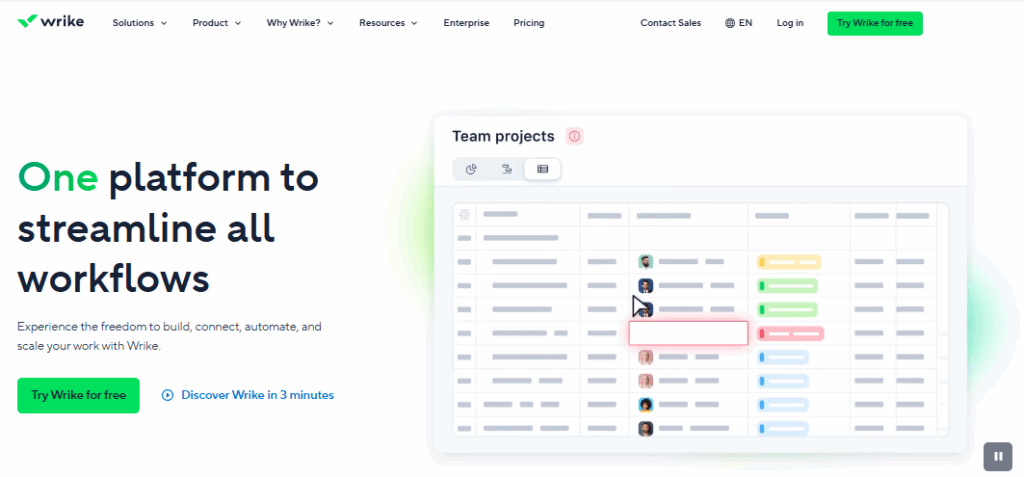
Wrike is the work management tool that enterprises trust when things get really complicated. Think Fortune 500, government agencies, global manufacturing firms – organizations with thousands of employees, strict compliance needs, and workflows that look like spiderwebs. 🕸️
Unlike Monday or Asana (which prioritize ease-of-use), Wrike prioritizes control, reporting, and scalability. It’s not the prettiest or the simplest, but for operations directors and PMOs, it’s a dream come true.
Why Enterprises Choose Wrike 💼
- 📊 Advanced reporting & analytics – Custom dashboards, real-time BI, workload heatmaps, time tracking, budget vs. actuals.
- 🔐 Enterprise-grade security – SAML 2.0 SSO, SCIM provisioning, audit logs, IP whitelisting, HIPAA compliance available.
- 🔄 Dynamic request forms – Automatically route requests based on fields (e.g., “IT issue” → IT queue, “HR request” → HR team).
- 🧩 Workflow automation – Conditional logic, auto-assignment, status transitions, external approvals.
- 📂 Folder & project hierarchy – Nest projects 5+ levels deep, perfect for program management.
- 🌍 Global resource management – See who’s available across time zones, forecast capacity months ahead.
- 🔗 400+ integrations – Salesforce, Jira, Adobe Creative Cloud, Tableau, Power BI, Teams, Slack.
Key Features of Wrike 🛠️
| Feature | What It Does |
|---|---|
| 📊 Live dashboards & analytics | Real-time charts, burn-up/burn-down, custom KPIs, schedule reports via email |
| 📅 Gantt charts with dependencies | Drag-drop, critical path, baseline tracking, what-if scenarios |
| 🧑💻 Workload & capacity planning | Visualize team utilization, reassign overloaded members, forecast hiring needs |
| 📝 Proofing & approvals | Review images, PDFs, videos – with markup tools and multi-step approval workflows |
| 🔄 Blueprint templates | Pre-built process templates for common workflows (IT, HR, Sales, etc.) |
| 🚦 Custom request forms | Conditional logic, file uploads, auto-routing, SLA tracking |
| 🤖 AI & automation | Predict task durations, auto-suggest assignees, generate subtasks |
| 🔐 Locked workflows | Mandatory fields, required approvals (great for compliance) |
Wrike Pricing (2026, annual billing) 💰
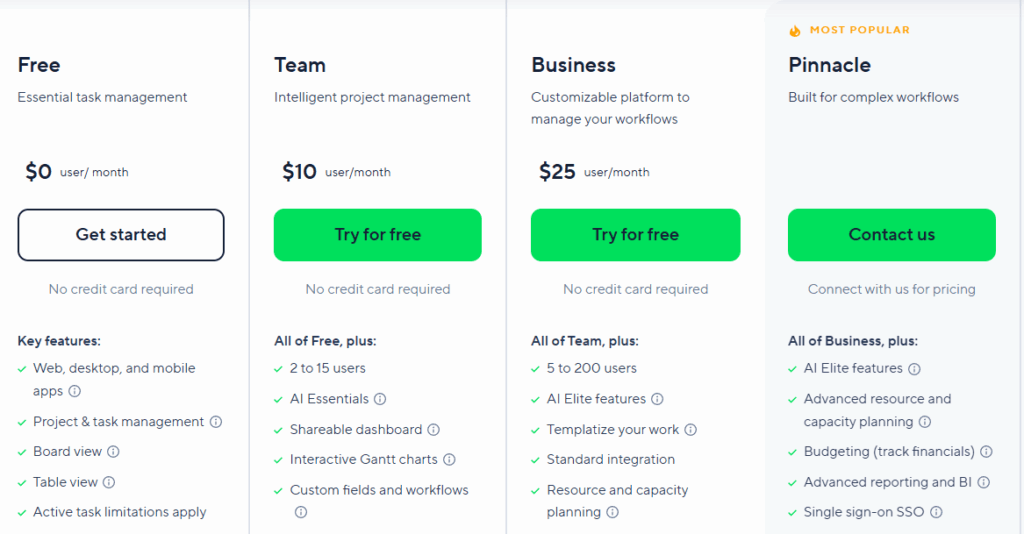
| Plan | Price per seat/month | Best For | Key Limits |
|---|---|---|---|
| Free | $0 (unlimited users) | Personal / micro teams | 2GB storage, limited features, no Gantt |
| Team | $10 | Small teams | Gantt, integrations, 2GB storage, 5 users min |
| Business | $25 | Mid-size orgs | Time tracking, custom workflows, SSO, 2TB storage |
| Enterprise | Custom (40–40–70 estimated) | Large enterprises | Advanced security, dedicated CS, uptime SLA |
| Pinnacle | Custom | Advanced orgs | Resource management, financial reporting, scaled automation |
⚠️ *Wrike’s Business+ and Enterprise tiers often require annual contracts + minimum seat counts (typically 25+ users). Get custom quotes.*
Pros & Cons of Wrike ✅❌
| ✅ Pros | ❌ Cons |
|---|---|
| Unmatched reporting & analytics | Expensive – especially at enterprise tier |
| Scales to 10,000+ users | Steep learning curve (enterprise complexity) |
| Great for PMOs & program managers | UI feels dated (not as modern as Monday) |
| Robust approval & proofing tools | Free & Team plans are very limited |
| Granular permissions & security | Overkill for small teams or simple projects |
Best For 🎯
- ✅ Large enterprises (500–5,000+ employees)
- ✅ PMOs (Project Management Offices) – Portfolio oversight, standards enforcement
- ✅ Regulated industries – Healthcare, finance, government (needs compliance)
- ✅ Marketing & creative agencies – High-volume proofs & client approvals
- ✅ Manufacturing & construction – Complex dependencies, long timelines, resource planning
My Verdict on Wrike 🧑⚖️
Wrike is the work management tool you graduate to when Monday or Asana isn’t enough. It’s not for beginners. It’s not for small teams on a budget. But if you’re a director or VP responsible for 500+ people across multiple countries and you need to know exactly where every project stands in real time – Wrike delivers. Just be ready to pay for it and train your team. 🏢
Rating: ⭐ 8.7/10 (enterprise users: 9.5/10)
Best alternative if Wrike isn’t for you: Monday Enterprise (simpler, less reporting) or Smartsheet (spreadsheet-like, great for operations).
8. Quick Comparison Table — Best Work Management Software (2026) 📊
Here’s your at-a-glance winner chart – all 5 tools compared side-by-side on the metrics that matter most. 👇
| Software | Best For 🎯 | Free Plan? | Starting Price (annual, per seat) | Key Strength 🦾 | Ease of Use (1–10) | Mobile App | AI Included? |
|---|---|---|---|---|---|---|---|
| Monday.com 🏆 | Overall work management | ✅ (2 seats) | $12 | Automation + ease of use | 9.5/10 | ⭐⭐⭐⭐⭐ | ✅ Yes |
| ClickUp ⚡ | Customization & all-in-one | ✅ (unlimited users) | $7 | Features per dollar | 7/10 | ⭐⭐⭐⭐ | ✅ Yes |
| Asana 🤝 | Simple team collaboration | ✅ (10 seats) | $10.99 | Clean interface + comments | 9/10 | ⭐⭐⭐⭐ | ✅ Yes |
| Jira 👨💻 | Agile development teams | ✅ (10 users) | $8.15 | Scrum & dev tooling | 5/10 | ⭐⭐⭐ | ✅ Yes |
| Wrike 🏢 | Enterprise workflow mgmt | ✅ (unlimited users) | $9.80 | Advanced reporting | 6.5/10 | ⭐⭐⭐ | ✅ Yes |
🔑 Legend & Notes
- Free plan – ClickUp’s is the most generous (unlimited members). Asana’s is great (10 seats). Monday’s is limited (2 seats, 3 boards).
- Starting price – Reflects annual billing lowest paid tier. Monthly billing is 15–25% higher.
- Ease of use – Monday is the easiest. Jira is the hardest for non-devs.
- AI – All 5 now have built-in AI features (some require paid plan).
9. Monday.com vs ClickUp vs Asana vs Jira vs Wrike 🔥
Choosing the right work management software depends on your team size, workflow, and goals. Some tools are better for simplicity, while others focus more on customization, developer workflows, or enterprise management. Here’s a quick comparison to help you decide which platform fits your needs best. 🚀
| Feature | Monday.com 🏆 | ClickUp ⚡ | Asana 🤝 | Jira 👨💻 | Wrike 🏢 |
|---|---|---|---|---|---|
| Best For | Overall work management | Custom workflows | Team collaboration | Agile & dev teams | Enterprises |
| Ease of Use | Very Easy ✅ | Moderate ⚙️ | Easy 👍 | Technical 😵 | Moderate 📊 |
| Automation | Excellent ⚡ | Advanced 🚀 | Good ✨ | Strong for dev workflows 🔧 | Advanced 📈 |
| UI & Design | Modern & visual 🎨 | Feature-heavy 📂 | Clean & simple 🧼 | Complex 🛠️ | Professional 💼 |
| Project Views | Kanban, Timeline, Calendar 📅 | Multiple advanced views 📊 | List & Board views 📋 | Scrum & Kanban 🧩 | Gantt & dashboards 📈 |
| Best Free Plan | Good for basics 🆓 | One of the best 🔥 | Limited ⚠️ | Good for developers 👨💻 | Limited ❌ |
| Integrations | Huge library 🔗 | Massive integrations 🌐 | Strong integrations 🔄 | Excellent for dev tools ⚡ | Enterprise integrations 🏢 |
| Mobile Experience | Smooth 📱 | Good 👍 | Clean 📲 | Developer-focused 💻 | Average 📴 |
| Learning Curve | Beginner-friendly 😊 | Slightly steep 📚 | Easy to learn ✅ | Difficult for beginners ❌ | Moderate ⚙️ |
| Pricing | Balanced 💰 | Affordable 💵 | Slightly expensive 💸 | Scales with users 📈 | Expensive for small teams 💳 |
10. Which Tool Should You Choose? 🤔
Choose Monday.com If: 🏆
You want the best overall balance of simplicity, automation, collaboration, and scalability.
Choose ClickUp If: ⚡
You love deep customization and want an all-in-one productivity system.
Choose Asana If: 🤝
You prefer a simple and clean interface focused on team collaboration.
Choose Jira If: 👨💻
Your team follows Agile workflows, Scrum, or software development processes.
Choose Wrike If: 🏢
You run a large enterprise needing advanced reporting and workflow management.

11. Final Verdict — Which Work Management Tool Should You Choose? ✅
You’ve seen all 5 tools in detail. Here’s the one-line summary of each, followed by my final recommendation.
📝 Short Summary of All 5 Tools
| Tool | One Sentence Verdict |
|---|---|
| Monday.com 🏆 | The best overall – easiest to use, beautiful, powerful automations. Worth the premium. |
| ClickUp ⚡ | The best value – insane features for the price, but has a learning curve. |
| Asana 🤝 | The best for collaboration – simple, calm, async comment threads. Remote teams love it. |
| Jira 👨💻 | The best for developers – unmatched for Agile and bug tracking. Keep non-devs away. |
| Wrike 🏢 | The best for enterprises – reporting, security, and scale. Expensive but powerful. |
🏆 My Final Recommendation (One Clear Winner)
If you can only pick one tool for your entire company – including marketing, ops, sales, design, and leadership – pick Monday.com. ☑️
Why Monday.com wins overall in 2026:
- ✅ Adoption rate is highest – your team will actually use it (not abandon it after 2 weeks)
- ✅ Automations are intuitive – save hours without hiring a consultant
- ✅ Visual dashboards – everyone understands status at a glance
- ✅ Scales from 2 to 2,000+ – you won’t outgrow it
- ✅ AI features are actually helpful – not just marketing hype
The only times you should NOT pick Monday:
- ❌ Your main problem is async remote communication → pick Asana (best comments)
- ❌ You’re on a super tight budget → pick ClickUp (saves ~$5/seat/month)
- ❌ Your team is 100% developers → pick Jira (better dev workflows)
- ❌ You need Fortune 500 enterprise reporting → pick Wrike (more advanced analytics)
Related Articles :-
- Monday.com vs Trello: Which Wins? (Full Comparison)
- Monday vs Notion (Comparison) Which One Is Best?
FAQs ❓
❓ Is Monday.com better than ClickUp?
It depends. Monday is easier (9.5/10 ease of use) and more polished. ClickUp is cheaper (free plan is better) and more customizable. For most teams, Monday wins because adoption = success. But if you’re on a budget and love tweaking settings, ClickUp is excellent.
❓ What is the easiest work management software?
Monday.com is the undisputed easiest. You can build a working board in 5 minutes without watching a single tutorial. Asana is a close second.
❓ Which tool is best for remote teams?
Asana – the comment threads are unmatched. You can have entire conversations inside tasks, tag teammates, attach files, and never need a meeting. Monday and ClickUp are also good, but Asana designed for async collaboration from day one.
❓ Is Jira only for developers?
Yes, mostly. Non-developers find Jira frustrating, overly complex, and ugly. If you have a mixed team (devs + marketing + sales), use Monday or Asana for company-wide work and let devs keep Jira for their sprint planning.
❓ Which work management software has the best free plan?
ClickUp by a mile – unlimited users, 100 automations/month, 100 custom fields, native docs, goals, time tracking. Asana’s free plan (10 users) is second best. Monday’s free plan (2 seats, 3 boards) is very limited.

👨💻 Hi, I’m Anas Khan, a digital marketing expert with over 5 years of experience in e-commerce and affiliate marketing. I specialize in finding the best coupon codes 💸, Black Friday promotions 🛍️, and discount offers 💥 to help you save big!
I’ve dedicated myself to staying on top of the latest trends 📈 in online deals, so I can offer you the most reliable, tested advice. Whether you’re looking for promo codes or exclusive Black Friday deals, you can trust that my recommendations are based on solid research and personal expertise 🏆.